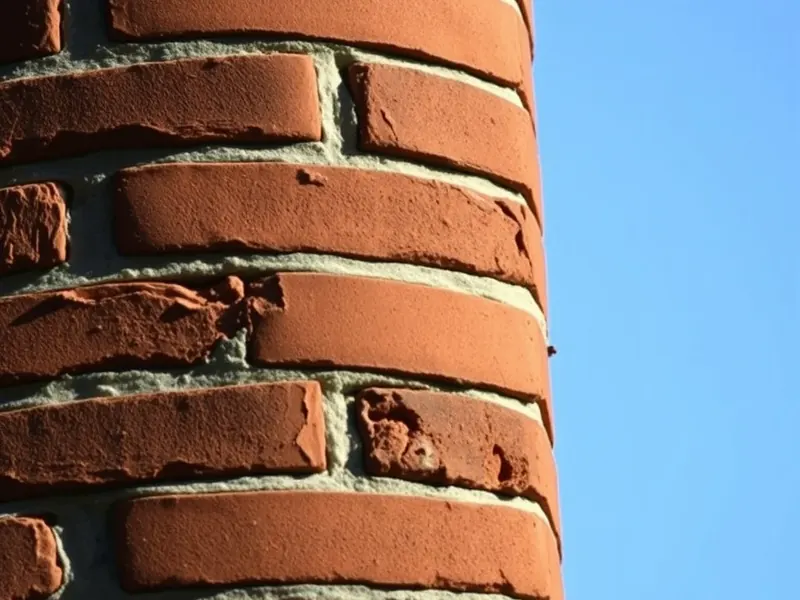
Brick stacks, prefab fireplaces and hard-working stoves
Older houses here tend to have one of three kinds of chimney, each wearing out in its own way. The first is the brick chimney of a farmhouse, a Victorian or an early cottage. Masonry of that age is usually unreinforced, and in earthquake country the section above the roofline is the part most likely to crack, twist or shed bricks. CSIA's procedure for chimney professionals names a weather or seismic event as grounds for a Level 2 inspection. Fresh mortar in the joints is good upkeep, but FEMA's guidance on earthquake-damaged chimneys warns that repointing alone does little to reduce damage in a future quake; the fix it prefers is to rebuild the upper chimney as a metal flue inside a light framed chase, as the seismic chimney repair page explains.
The second is the factory-built fireplace found in many later tract houses and remodels: a metal firebox and chimney pipe inside a wood-framed chase, tested and listed as one assembly. Worn refractory panels, rusted chase covers and loose pipe joints are the usual complaints, and only parts made for that model belong in it. When a unit is beyond fireplace repair, the guide to repairing or replacing a prefab fireplace lays out the choices.
The third is the wood stove. In Inverness, around Lagunitas and Forest Knolls and on rural lots near Penngrove, a wood stove still heats a good number of homes, and one that runs every day builds creosote far faster than a weekend fire, especially on wood that is not fully dry. Those flues are worth checking during the burning season as well as before it; a chimney sweep with a look at the connector pipe, the cap and the spark screen covers both.
Checklist for an older house from Novato to the Sonoma Valley
- Look up the day's Spare the Air status before lighting. Marin and southern Sonoma County both fall within the Bay Area Air District, where an alert for fine-particle pollution bans wood burning on any day it is called. Most alerts have arrived between November and February, and Rule 6-3, the wood-burning rule behind them, was amended on October 1, 2025; the Air District's wood smoke page explains the exemptions.
- Burn only seasoned, split wood, stacked off the ground and covered on top well before winter, and look over the stove pipe each fall for rust, sagging sections and loose joints; damp wood is the quickest route to creosote in a stove flue.
- Look at the chimney top after any quake and before the next fire. Cracked mortar, a lean or a gap against the siding means the fire waits until a local chimney pro has seen it.
- Find the listing label on a prefab fireplace, often behind the lower grille or on a firebox wall, and photograph it; it decides which parts and inserts fit.
- Follow the CPSC damper rule: open before lighting, close only once the ashes are completely cool, and keep carbon monoxide alarms outside every sleeping area.
- Keep the spark screen clear. A clogged screen chokes the draft, and a missing one lets embers drift out over summer-dry grass.
How to use and credit the North Marin and Sonoma figures
Every number in the town table is a U.S. Census Bureau American Community Survey 5-year estimate, and Census data is public domain. Chimney Services Pro releases the compiled table under a Creative Commons Attribution license (CC BY 4.0), so a local paper, school project, fire-safe council newsletter or real estate agent may republish or rework it, crediting the source and linking back here. The CSV file linked under the table holds the same rows.
Small, rural places need extra care. In the West Marin villages and in communities such as Penngrove and Black Point-Green Point, the survey reaches comparatively few households, so the margin of error is wide next to the estimate; the Bureau lists the margin next to every estimate on data.census.gov. Treat small differences between rows as no difference at all.
The main column also has limits worth stating wherever it is quoted. Rentals, apartments and condominiums in larger buildings are outside it, and it cannot tell which of the houses it counts still have a working chimney, a gas insert or no fireplace at all.